


Why we still need a human hand to curate our stories
The Algorithmic Illusion of Choice
We live in an era where we are constantly being fed. From the books suggested on our e-readers to the articles populating our newsfeeds, an invisible hand is constantly reaching out, offering us what it 'thinks' we want. This hand, however, is not made of flesh and bone; it is a series of cold, mathematical calculations. While the tech industry promises that algorithms will democratize discovery, the reality is far more sterile. We are being trapped in a feedback loop of the familiar.
I contend that the greatest stories ever told—the ones that shift our perspectives and stay with us long after the final page—were never discovered through a data point. They were found because a human being, with all their biases, history, and emotional complexity, decided that a specific voice mattered. As we move deeper into the digital age, the need for a human hand to curate our stories has transitioned from a luxury to a necessity.
The Death of Serendipity in Data-Driven Worlds
Algorithms are designed to minimize risk. They look at what you liked yesterday and give you more of the same today. In the world of content marketing and literary discovery, this is a recipe for stagnation. If we only consume what we are mathematically predicted to enjoy, we lose the magic of serendipity—the 'happy accident' of stumbling upon a perspective that is entirely foreign to our own.
The Echo Chamber of 'Engagement'
When we allow code to curate our narratives, we are prioritizing engagement over impact. An algorithm doesn't care if a story changes your life; it only cares if you click on it. This has led to a flattening of the literary and digital landscape. We see the same tropes, the same headlines, and the same 'safe' narratives rising to the top. Human curators, conversely, are often drawn to the friction. We look for the stories that challenge us, the ones that are difficult to categorize, and the ones that possess a certain 'je ne sais quoi' that a machine simply cannot quantify.
Curation as a Literary Act
Curation is not merely a filter; it is a creative act in its own right. Whether it is a publisher selecting a manuscript or a curator building the program for the Jaipur Literature Festival, the act of choosing is an expression of values. When I look at the landscape of contemporary Indian literature, the stories that stand out are those that have been championed by people who understood the cultural nuances, the history, and the emotional weight behind the words.
A machine can identify keywords like 'Himalayan fiction' or 'post-colonial identity,' but it cannot understand the weight of the silence between the words. It cannot feel the tension in a character’s internal monologue or the subtle subversion of a traditional trope. Human curators bring their lived experience to the table, allowing them to spot brilliance in the margins where an algorithm only sees an outlier.
Why Content Marketing Needs the Human Touch
In the realm of brand storytelling and content marketing, the push toward automation is particularly dangerous. Brands are increasingly turning to AI to generate and curate their content, hoping for efficiency. But efficiency is the enemy of intimacy. For a brand to truly resonate, its story must feel authentic, and authenticity is a uniquely human currency.
Here is why a human hand remains indispensable in the curation process:
- Contextual Awareness: Humans understand the current cultural climate. We know when a story is timely, when it is sensitive, and when it is revolutionary.
- Emotional Resonance: A human curator can feel when a narrative has 'soul.' They can distinguish between a technically perfect story and one that actually moves the reader.
- Ethical Responsibility: Algorithms do not have a moral compass. Human curators act as gatekeepers, ensuring that stories are told with integrity and respect for the subject matter.
- The Power of the Unexpected: Humans have the ability to take risks on 'unmarketable' stories that eventually become cultural touchstones.
The Uncanny Valley of Automated Narratives
We are currently witnessing the rise of the 'uncanny valley' in content. We see articles and stories that look right and sound right, yet feel fundamentally hollow. This hollowness exists because there is no human intention behind the curation. When a human selects a story, they are saying, 'This moved me, and I believe it will move you too.' That transfer of emotion is the heartbeat of storytelling. Without it, we are just consuming data.
The Future is Hybrid, but the Heart is Human
I am not suggesting that we should abandon technology altogether. Data can be a useful tool for understanding reach and accessibility. However, it must remain a tool, not the master. The moment we abdicate our responsibility to choose, to judge, and to feel for the stories we share, we lose what makes storytelling a transformative experience.
The role of the curator—the publisher, the editor, the literary festival director—is to be a bridge between the creator and the audience. It is a role that requires empathy, intuition, and a deep love for the craft. As we are bombarded by an infinite stream of content, the human hand that points us toward the meaningful is more vital than ever. We don't need more content; we need more connection. And connection is something that can only be curated by a human heart.

Why the best brand storytelling actually reads like a great novel
The Silent Resonance of the Written Word
In the quiet corners of a library, where the scent of aged paper meets the anticipation of a new journey, we find the essence of what it means to be human. As a novelist, I have spent decades navigating the intricate labyrinths of character, setting, and the unspoken emotions that bridge the gap between a writer’s heart and a reader’s mind. Yet, in our modern, hyper-connected world, I find these same literary principles emerging in an unexpected place: the landscape of content marketing.
This commitment to atmosphere reflects the principles I have followed while shaping major literary festivals, ensuring that every participant feels like an integral part of a living story.
We often think of branding as a series of transactions—logos, slogans, and conversion rates. But the brands that truly endure, those that leave an indelible mark on our collective consciousness, do not merely sell products. They tell stories. And the best of these stories do not read like advertisements; they read like great novels. They possess a soul, a sense of place, and an understanding of the human condition that transcends the commercial.
The Protagonist’s Journey: Finding the Soul of a Brand
Every great novel begins with a character—a protagonist who is seeking something, perhaps something they cannot yet name. In the realm of content marketing, the brand often forgets that it is not the hero of the story; the audience is. However, for the audience to see themselves in the narrative, the brand must act as the guiding spirit, the wise mentor, or the atmospheric backdrop that makes the journey possible.
When we reflect on the deepest layers of brand storytelling, we realize that a brand must have an internal life. Just as I might map out the histories and secrets of characters in a Himalayan saga, a brand must understand its own heritage, its vulnerabilities, and its ultimate purpose. Why does it exist beyond the profit margin? What is the ‘inner weather’ of the company?
Beyond the Persona
In marketing, we often speak of ‘personas,’ but in literature, we speak of ‘souls.’ A persona is a mask; a soul is a revelation. The brands that resonate most deeply are those that drop the mask and speak with an authentic, perhaps even flawed, voice. They offer a reflection of the reader’s own aspirations and fears, creating a space where the consumer feels seen and understood, much like a reader feels an intimate connection to a character in a well-loved book.
Setting the Scene: Texture, Place, and the Senses
In my writing, the setting is never merely a backdrop; it is a character in its own right. Whether it is the mist-covered peaks of Kumaon or the bustling literary hubs of Jaipur, the environment dictates the rhythm of the story. Brand storytelling requires a similar commitment to atmosphere. It is not enough to state a value proposition; one must create a world in which that value feels inevitable.
This is where content marketing often falters—by being too clinical, too sterile. A great novel uses sensory details to ground the reader. To make brand storytelling read like literature, we must consider the textures of the experience. How does the brand feel in the hand? What memories does it evoke? What kind of world does it inhabit? When a brand masters this, it moves from being a utility to being an experience—a place where the customer wants to linger.
The Arc of Transformation
No one finishes a great novel the same person they were when they opened the first page. There is a transformation, a subtle shift in perspective. Brand storytelling should aim for nothing less. Instead of focusing on the 'features' of a service, reflective content marketing focuses on the 'becoming.'
Consider the elements that bridge the gap between fiction and a powerful brand narrative:
- Conflict and Resolution: A story without tension is merely a statement. A brand must acknowledge the challenges its audience faces and offer a path toward resolution that feels earned, not forced.
- Pacing and Rhythm: Just as a novel has crescendos and quiet moments of reflection, a content strategy should respect the reader’s time, offering depth when needed and brevity when appropriate.
- The Unspoken Subtext: The most powerful parts of a novel are often what is left unsaid. Brands that trust their audience’s intelligence—those that don’t over-explain—create a sense of mystery and invitation.
- Emotional Resonance: Logic may justify a purchase, but emotion drives the connection. A story that touches the heart will always outlast a list of specifications.
The Enduring Power of the Human Narrative
As we navigate an era increasingly dominated by algorithms and automated content, the craving for the 'human' becomes more acute. We are, at our core, storytelling animals. We seek meaning in the chaos, and we find that meaning in the narratives we consume and the brands we choose to bring into our lives.
Reflecting on my journey as a novelist and a curator, I see that the boundaries between the literary and the commercial are blurring. This is not a dilution of art, but rather an elevation of communication. When a brand treats its story with the same reverence a novelist treats their manuscript, it ceases to be noise. It becomes a voice—a clear, resonant voice that speaks through the digital clamor to find a home in the reader’s mind.
Ultimately, the best brand storytelling is an act of empathy. It is an invitation to step into a shared world, to explore a common value, and to participate in a story that is still being written. In that shared space, the brand and the consumer become part of a larger, more beautiful narrative—one that reads, quite simply, like a life well-lived.

From Paro to Lost in Time: Tracing the Literary Journey of Namita Gokhale
Over the course of four decades, Namita Gokhale has carved an indelible space in Indian literature—as a novelist, editor, essayist, and literary curator. Her body of work defies easy categorization, spanning satire, memoir, historical fiction, mythology, and literary activism. Yet a common thread runs through it all: a fearless examination of women, time, and memory within the Indian cultural context.
From the bold and controversial Paro: Dreams of Passion to the mythopoetic Lost in Time: Ghatotkacha and the Game of Illusions, Gokhale’s literary evolution reflects both the transformation of Indian society and her own deepening creative vision.
1984: Paro Breaks the Silence
Gokhale’s literary debut, Paro, was a satirical, no-holds-barred exploration of urban sexuality and elite hypocrisy. Published in a pre-liberalisation India, it shocked many—and earned cult status among others.
- Voice: Bold, ironic, female, unapologetic
- Impact: One of the earliest Indian novels to center female sexual autonomy
- Legacy: Paro opened the door for future generations of Indian women writers
The Turn Inward: A Himalayan Love Story and the Roots of Memory
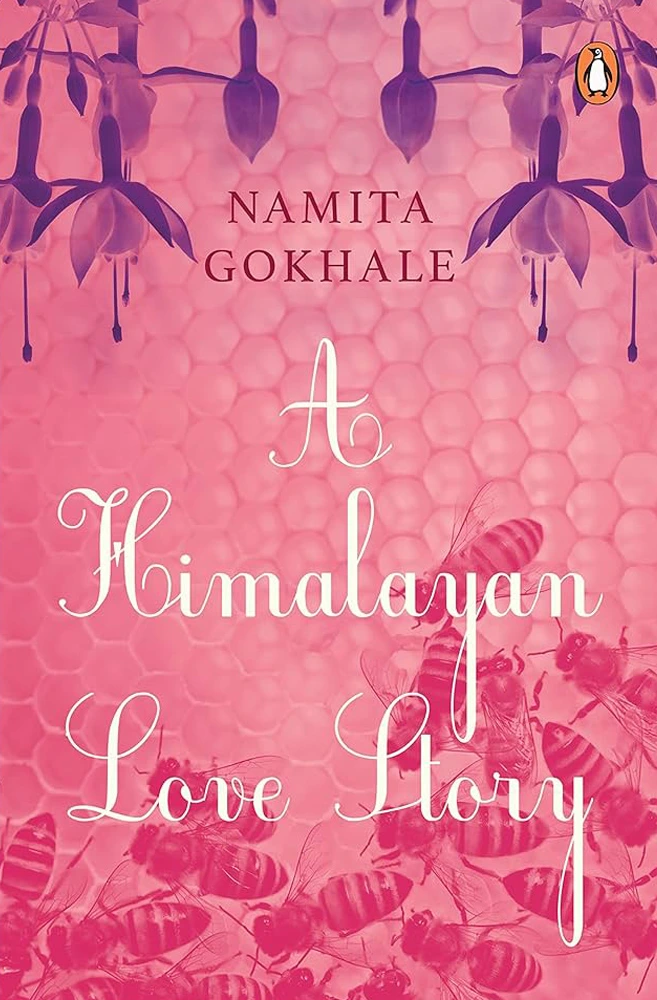
In the mid-90s, Gokhale pivoted from satire to introspection. A Himalayan Love Story drew from personal experience and the mystique of the Kumaon hills to reflect on loss, longing, and spiritual fragility.
- A subtle meditation on mental illness and womanhood
- Introduced her signature theme: the Himalayas as emotional terrain
- Marked the beginning of the Himalayan Trilogy
Mid-Career Mastery: History, Myth, and the Feminine Gaze
Through the 2000s and 2010s, Gokhale’s fiction expanded in scale and ambition:
✦ The Book of Shadows (1999)
A metaphysical tale set in the aftermath of death—blending realism and reincarnation with eerie clarity.
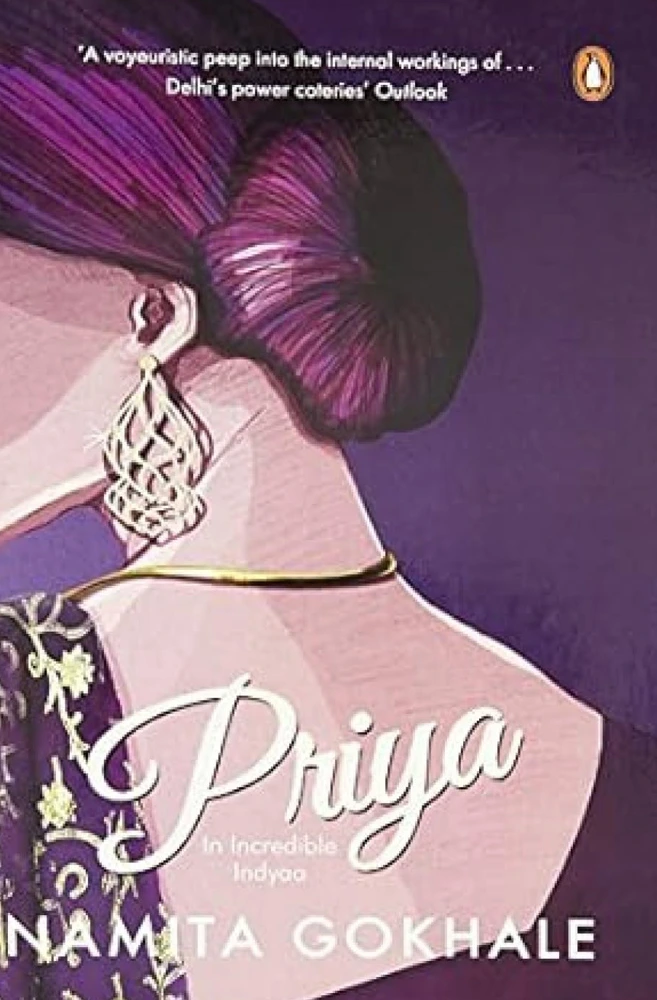
✦ Priya: In Incredible Indyaa (2010)
A sharp sequel to Paro, updated for the glitzy, post-globalization age.
✦ Things to Leave Behind (2016)
An epic of 19th-century Kumaon that explores colonial erasure, caste, and feminine resistance, solidifying her status as a literary historian.
Gokhale’s mature fiction often reclaims forgotten voices and marginal histories, particularly women’s inner worlds silenced by patriarchy and time.
Recent Work: Time, Illusion, and Literary Experimentation
In her latest works, Gokhale continues to push boundaries of form and genre:
✦ Lost in Time: Ghatotkacha and the Game of Illusions (2022)
A mythological retelling through a modern lens—this novella reimagines the Mahabharata’s outsider prince as a symbol of displacement and otherness.
- Targeted at younger readers, but layered with adult resonance
- Fuses myth, history, and psychological depth
- Explores themes of identity, belonging, and fate
Beyond the Page: Editing, Publishing, and Literary Diplomacy
Gokhale’s contribution to Indian literature extends well beyond her writing desk:
- Co-founder of the Jaipur Literature Festival (see previous post)
- Publisher at Yatra Books, championing translations in Indian languages
- Editor of numerous anthologies, giving platform to emerging writers and marginalized voices
Her curated collections—such as Travelling In, Travelling Out and Democracy Dialogues—reflect her commitment to plurality and complexity in Indian discourse.
Final Thoughts: A Literary Life Without Borders
From the urbane wit of Paro to the mythic echoes of Lost in Time, Namita Gokhale’s literary journey is as expansive as it is intimate. Her stories are deeply rooted in Indian soil, yet speak to universal questions—of love, exile, voice, and power.
In an era of homogenized narratives, Gokhale’s work continues to challenge conventions, elevate the silenced, and celebrate the polyphony of Indian life.

How Namita Gokhale Helped Shape the Jaipur Literature Festival
The Jaipur Literature Festival (JLF) has been hailed as "the greatest literary show on Earth"—a vibrant confluence of writers, thinkers, activists, and readers from across the globe. But behind this global phenomenon stands one of its principal visionaries: Namita Gokhale.
A writer, publisher, and cultural entrepreneur, Gokhale’s role in shaping JLF is both foundational and transformational. Her curatorial insight, passion for Indian languages, and commitment to inclusivity have made the festival not only successful—but historically significant.
The Origins: A Festival Rooted in Ideas
Founded in 2006 as a modest literary gathering, the Jaipur Literature Festival grew rapidly under the leadership of Namita Gokhale, William Dalrymple, and Sanjoy K. Roy (of Teamwork Arts).
Gokhale brought to the table:
- A deep literary sensibility, grounded in Indian and global writing
- Experience as a publisher with Yatra Books, promoting translations and vernacular literature
- A vision for equality, ensuring the festival welcomed voices beyond metropolitan, English-speaking elites
Diversity of Voices: A Signature of Gokhale’s Curatorship

What sets JLF apart is its pluralism—and much of that can be traced to Gokhale’s programming ethos.
She consistently champions:
- Regional and indigenous languages
- Debut and emerging authors alongside global bestsellers
- Unheard voices: Dalit writers, women from conflict zones, LGBTQ+ thinkers, environmentalists, and spiritual philosophers
Gokhale’s belief: A literary festival must reflect the society it inhabits.
Literature Beyond Borders
Under Gokhale’s curatorship, JLF grew into an international platform with editions in:
- London
- Boulder (Colorado)
- New York
- Doha
- Adelaide
- Toronto
Yet, at every location, the soul of the original Jaipur event remains: an open, democratic space for dialogue, dissent, and discovery.
Intellectual Curation with Cultural Integrity
Unlike typical panel programming, Gokhale approaches curation as a literary architecture—weaving connections across genres, geographies, and ideologies.
Her strengths include:
- Spotting emerging literary movements before they become mainstream
- Inviting cross-cultural, interdisciplinary panels—where historians speak with poets, scientists debate with novelists
- Curating sessions in Hindi, Urdu, Bangla, Tamil, and other Indian languages, ensuring linguistic inclusion
Quote from Gokhale: “We are not a festival of the elite. We are a festival of ideas.”
Recognition & Cultural Legacy
Thanks in no small part to Gokhale’s stewardship, JLF has received:
- Global press acclaim (The Guardian, NYT, WSJ, etc.)
- Over half a million visitors annually in Jaipur alone
- A reputation as one of the world’s most accessible literary forums, where Nobel laureates, rural poets, and curious students all share the same stage
Final Thoughts: A Festival With a Soul
In an age where cultural events can feel commercialized or exclusionary, Namita Gokhale ensured that JLF remained a public intellectual space—rooted in Indian traditions but open to global currents.
Through tireless curation, an eye for underrepresented narratives, and an unwavering belief in the power of words, Gokhale helped build more than a festival—she helped build a movement.
For those interested in learning more about global trends and insights, this resource provides valuable insights and information on the topic.

Inside the Himalayan Trilogy: Exploring Identity and History in Namita Gokhale’s Fiction
Acclaimed Indian author, publisher, and literary visionary Namita Gokhale has long been celebrated for weaving India’s complex heritage into intimate, resonant narratives. In her critically acclaimed Himalayan Trilogy—comprising Paro: Dreams of Passion, A Himalayan Love Story, and Things to Leave Behind—Gokhale offers more than just regional storytelling. She crafts a sweeping meditation on identity, memory, and the shifting contours of history.
This post delves into the themes, contexts, and characters of the Himalayan Trilogy, and how Gokhale uses fiction to navigate the interplay of personal and collective experience in India’s Himalayan belt.
The Himalayan Setting: Geography as Character
Gokhale’s trilogy is deeply rooted in the Kumaon region of Uttarakhand, where the mountains are not mere backdrops, but living forces—silent witnesses to colonial trauma, caste dynamics, love, longing, and the slow churn of change.
Each novel captures a different phase in Indian history, using the Himalayas as a metaphorical and narrative anchor. The terrain reflects both isolation and resilience, and the stories mirror the tension between preservation and progress.
Book One: Paro: Dreams of Passion – A Satirical Prequel
While not set in the Himalayas, Paro acts as a thematic prelude to the trilogy. Written in a razor-sharp, ironic tone, the novel deconstructs urban elitism, gender performance, and sexuality in modern India.
- Identity through satire: Gokhale exposes the fragility of female empowerment amid performative modernity.
- Narrative innovation: Through a first-person narrator, she layers voice, voyeurism, and class critique.
The contrast between Paro and the later Himalayan settings marks a transition—from the hyper-visible to the marginalized.
Book Two: A Himalayan Love Story – Personal Grief and Postcolonial Echoes
This deeply autobiographical novel draws from Gokhale’s own experiences and connections to the Kumaon hills. It follows Parvati, a woman burdened by loss, navigating grief, memory, and identity in a town where history is embedded in the soil.
- Themes: Mental illness, spiritual yearning, patriarchal confinement
- Context: Set in the postcolonial 20th century, it reflects how personal trauma mirrors national dislocation.
The prose is meditative, fluid, and steeped in the melancholy of the mountains.
Book Three: Things to Leave Behind – Memory, Empire, and Feminine Agency
Award-winning and widely recognized, Things to Leave Behind explores the transition from the 19th to the 20th century, blending real historical figures with fictional characters to reimagine the social fabric of colonial India.
- Historical lens: Focuses on the 1857 Rebellion, the birth of Indian nationalism, and how colonialism reshaped local identities.
- Women at the center: Gokhale spotlights midwives, wives, widows, and outcasts—challenging dominant narratives of the time.
It’s a complex mosaic of resistance, inheritance, and belonging.
Literary Themes Across the Trilogy
1. Gender and Voice
From Paro’s defiance to Parvati’s introspection to Tilottama’s quiet rebellion, Gokhale crafts multifaceted female protagonists navigating both personal and political constraints.
2. History as Palimpsest
The trilogy doesn't just recount history—it rewrites it. Colonial archives, oral memory, and forgotten myths are all braided into the narrative.
3. Spiritual Geography
The Himalayas serve as more than just scenery—they are symbolic landscapes, echoing the metaphysical concerns of identity, time, and belonging.
Final Thoughts: The Trilogy as a Mirror
The Himalayan Trilogy is not only a literary achievement, but also a cultural cartography of the self and the nation. Through Gokhale’s eyes, the region becomes a place where history breathes, memory lingers, and identities evolve—always in tension, always in motion.
For readers seeking fiction that is both deeply personal and historically expansive, the Himalayan Trilogy stands as essential reading.